


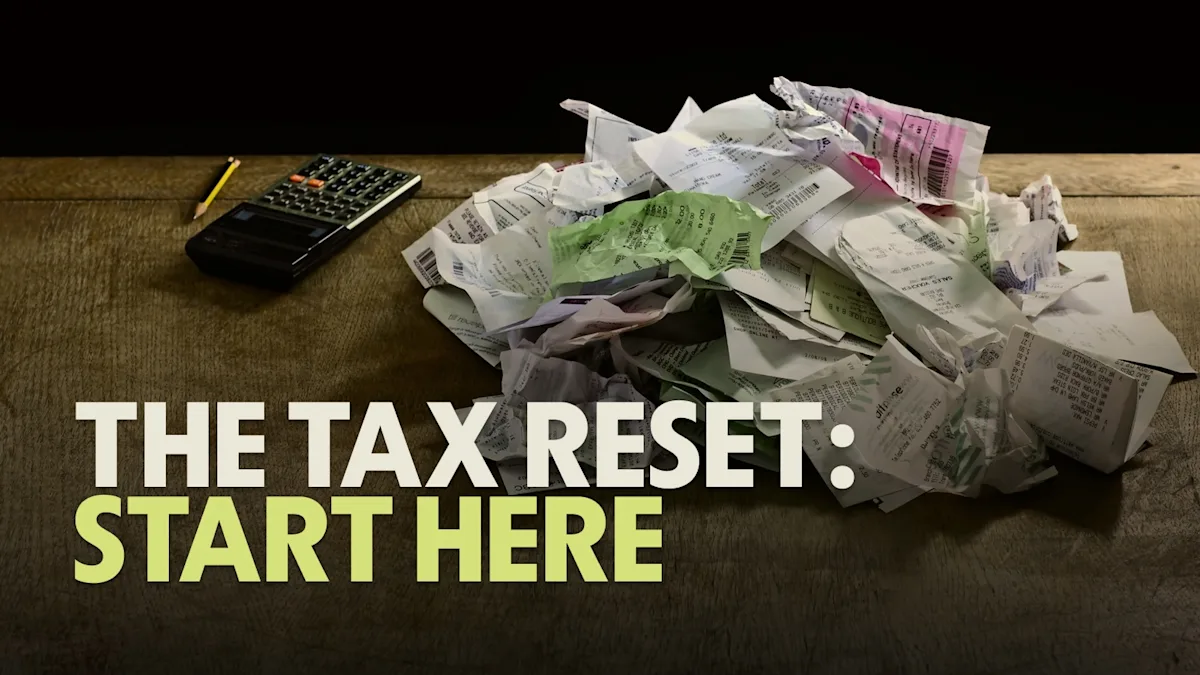
When March hits, tax season suddenly feels unavoidable. What was easy to push aside in January now sits front and center, and the longer it's been waiting, the heavier it feels. If that sounds familiar, know that you're in a very common spot—not headed toward failure. Most tax panic comes from uncertainty about what's required, what should be a priority, and what options are available. Clarity is within reach, and it doesn't require everything to be in perfect order.
Here are three practical steps to get unstuck and start moving forward on your taxes right now.
Step 1: Get help—even if you plan to extend
If you don't already have a tax advisor, start looking for one now. You'll want someone who specializes in taxes—typically a CPA (Certified Public Accountant) or an EA (Enrolled Agent). CPAs often provide a broader range of accounting services, while EAs focus specifically on taxes, but both are licensed to represent you before the IRS, and either is a great option.
Here's something worth knowing: most CPAs are in their busiest stretch of the year right now. If you're expecting to find someone who can jump in, clean everything up, and file by April 15, you're setting yourself up for frustration. But it's completely okay to tell a CPA upfront that you plan to extend your return. In fact, they love hearing it.
If you reach out and say, "I know you're in the thick of busy season. I'm happy to extend and work through this properly after April," that completely changes the tone of the conversation. It shows you understand how this works, and makes it much more likely they'll want to work with you. The right support will depend on your situation, but what matters most is committing to a path before you try to map every requirement. Staying undecided builds pressure and keeps you stuck.
Step 2: Focus on an estimate, not perfection
Right now, the priority isn't to file a perfect return. It's to get a rough sense of what you owe and pay it before the deadline.
That's it.
As long as you extend and pay the tax you owe, the IRS doesn't mind if you file later. More importantly, once you have a number—even a ballpark—you're no longer guessing. And guessing is what fuels most of the anxiety. If you don't know whether you owe $5,000 or $50,000, your brain fills in the worst-case scenario. Once you have an approximate number, you can start planning.
What does it actually mean to be 'ready enough' to start? In practice, it’s about centralizing your data rather than perfecting it. Instead of chasing down every receipt, start by pulling your total revenue from your bank or accounting system and totaling your primary expense categories. Gather your year-end payroll reports and any tax payments you’ve already made. At this stage, completeness is more important than perfect accuracy—you can refine the details once the big picture is in one place.
You'll also want to know which return you're filing and when it's due. Different business types have different deadlines: a sole proprietor or single-member LLC usually files with the owner's personal return. S corporations and partnerships file separate business returns on their own timelines. And keep in mind that filing and paying are not the same thing—you can file on time and arrange a payment plan separately if needed.
Step 3: Stop trying to fix everything at once
This is where a lot of owners get stuck. They think they need perfect books and every transaction categorized before they can do anything. You don't. You're not trying to fix everything right now. You're just moving it forward.
A practical way to do this is a short 7-day plan that keeps you focused without requiring you to drop everything else. Here's what that looks like:
Confirm your deadlines. Write down when your federal return is due. If you're filing an extension, that request is due the same day—and it gives you a new filing date to work toward. Add any state or city deadlines that apply.
Schedule one working session. Block a couple of hours when you're least likely to get pulled into day-to-day work. Use it to turn your rough numbers into something your CPA, EA, or bookkeeper can actually use.
Gather your documents. Bank and credit card statements, sales reports, payroll summaries, contractor payment records, any 1099-NEC or 1099-K forms you received, and proof of estimated tax payments.
Align with your support. Send a quick message to your CPA or bookkeeper with your business type, where your records live, and any open questions.
Plan for payment. If you expect to owe and cash is tight, think through your options before the payment deadline. The IRS offers short-term payment plans and longer-term installment agreements.
Once you've engaged a tax pro and gotten an estimate, you've already done the hardest part. Everything after that is just working the plan. Choosing momentum over total completion is how tax season stops feeling overwhelming and starts feeling manageable.
Keep next year from feeling like this
Once you’re through this season, the easiest way to reduce tax stress is simple: keep your money organized all year. Relay1 lets you set aside funds for taxes, automatically track spending, and give your CPA secure access—so March becomes a review, not a reconstruction. See how Relay helps keep your books tax-ready year-round.
1Relay is a financial technology company and is not an FDIC-insured bank. Banking services provided by Thread Bank, Member FDIC. FDIC deposit insurance covers the failure of an insured bank. Certain conditions must be satisfied for pass-through deposit insurance coverage to apply.