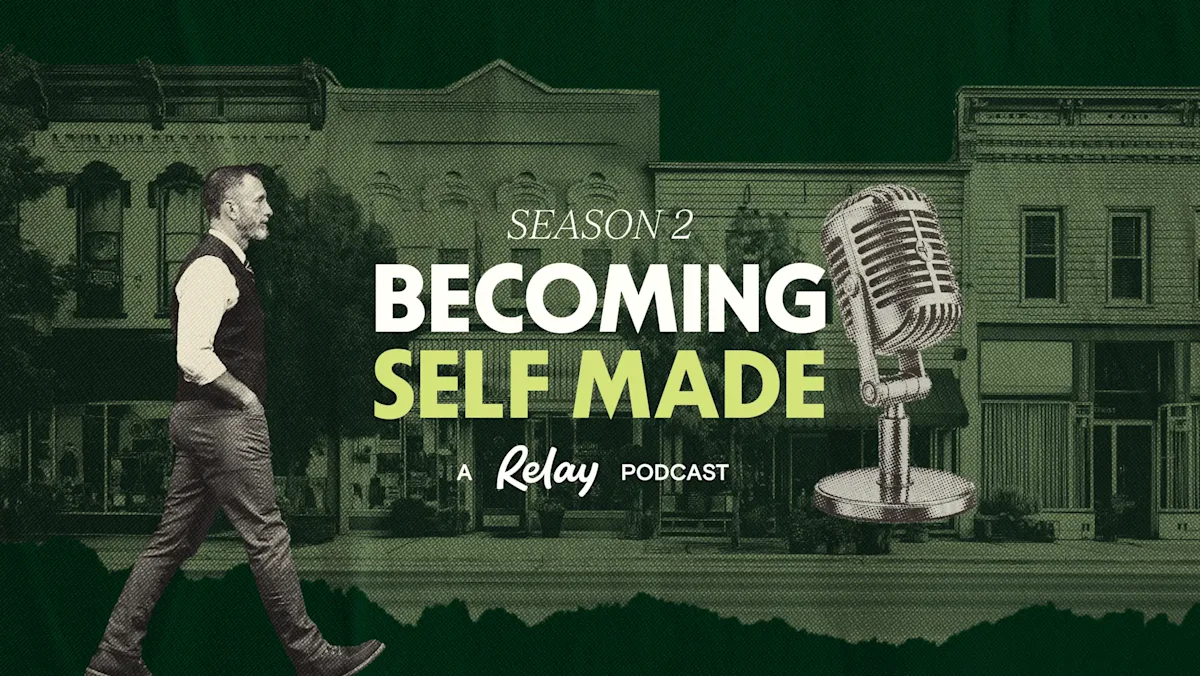
When Becoming Self Made launched last year, the premise was simple: skip the highlight reel and get honest with the people behind real businesses. A season later, the bet has paid off. The show has grown into one of the top 10% most-downloaded podcasts in the world, and host Mike Michalowicz—bestselling author, entrepreneur, and small business champion—has come away with a fundamentally changed view of what it means to build something.
Season 2 is now on the horizon, bringing new guests, new formats, and a few new risks Mike's willing to take on camera. Before the episodes drop, we sat down with Mike to talk about what Season 1 taught him, how his approach has evolved, and why he's only grown more convinced that every entrepreneur's story deserves to be told.
After a full season sitting down with business owners and hearing these stories firsthand, how has your perspective on entrepreneurship evolved?
It's funny, I actually say this in one of the episodes. I originally thought that the path to becoming self-made is like a roller coaster, these constant ups and downs. And I was expecting that pattern, but that wasn’t always the case. Some patterns were high for a very long time, others very low, but with these momentary blips. And it's like—oh! This isn't a roller coaster, it's a fingerprint.
Everyone has a distinct, unique, signature life experience. I was hoping I could say, "When you hit five years in business, here's what to expect." But that's not how it works. Everyone has a unique fingerprint. That was a new perspective I came away with.
What surprised you most about how those Season 1 conversations unfolded?
There were quite a few things that happened off camera that you never see. I remember Jesse Cole and me walking around the Savannah Bananas’ stadium after the interview—probably two or three hours of him graciously spending time with me, but also working the entire time. We're walking through the seats and he keeps glancing down. I ask him what he's looking at. He says, "I have to make sure every seat is positioned so the viewing vantage point is perfect. I want everyone to have an immaculate experience." I wish that was on tape.
Don Miller and I went for a drive in his truck and just shared personal stories. That experience had a humanness that sometimes doesn't even come out on video. There's even more of it when nothing's rolling—maybe because nothing's rolling. Some stories may never be captured. I wish we saw more of those.
Are you doing anything differently in Season 2 to bring more of that out on camera?
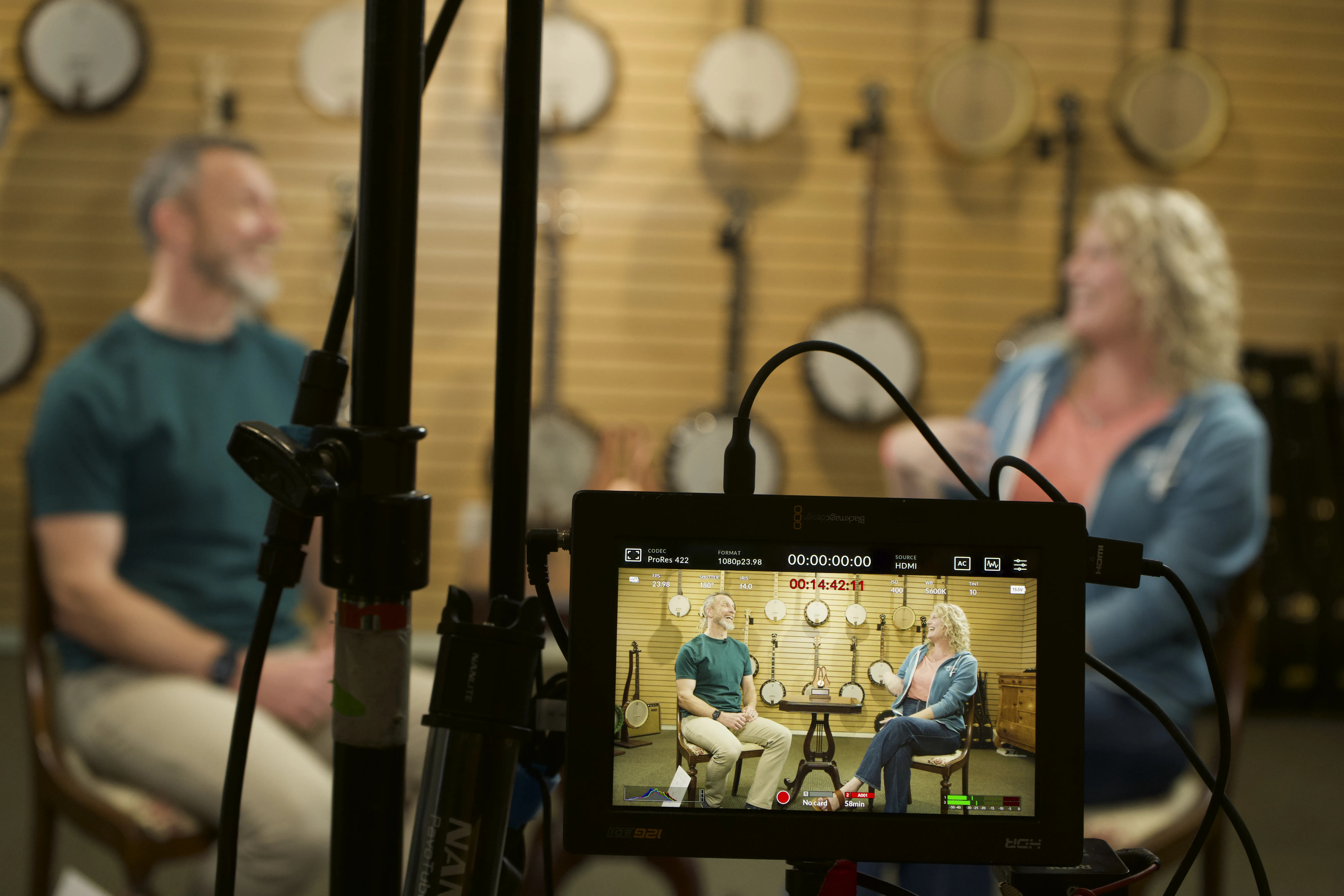
Yeah, we start to roll before anyone signals we're rolling. There's this natural conversation that unfolds the first time I meet a guest, and they just start sharing stories. It’s like, “oh, this is so good.” But if we try to bring it back, it's almost artificial. They start repeating themselves and lose that freshness. So we roll before anyone knows we’re rolling, and we don’t stop when they think it’s done. With their permission, we're going to share some of those moments this season.
Season 1 proved there's a real hunger for these honest entrepreneurship conversations. Why do you think they resonate so deeply right now?
There's so much changing—the economy, regulations, AI. There's so much confusion. I see people frozen in place. And when you hear these stories, you realize you're not alone. These same patterns have presented themselves before, just in different flavors, in different ways.
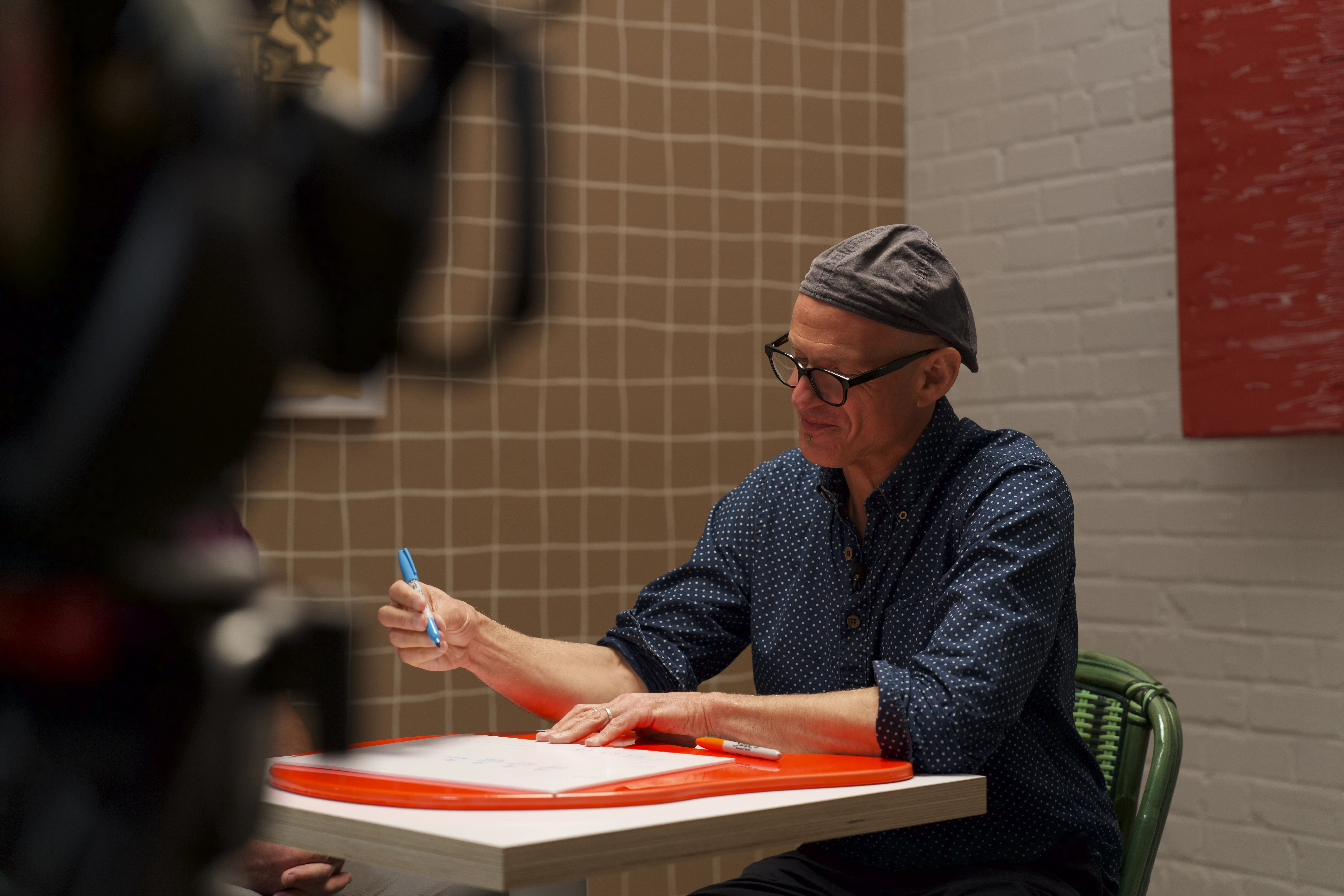
The most interesting thing to me is that it's always in hindsight that things make sense. We do this exercise on the show called the lifeline—this fingerprint of someone's entrepreneurial journey. When you look at the dots in reverse, you understand exactly why they're at their current dot. But you can only see it in reverse.
For anyone listening: we don't know what the future holds. We can't predict it. But when we see where someone else ended up, all of our own dots up to this point start making more sense.
What does "self-made" mean to you now, after all of those conversations? Has the definition changed?
Completely. Going into this, I thought self-made was an outcome—a final product. Like a manufacturing process where at the very end, there's the widget. Self-made meant you'd arrived. Now I see it as an evolution, an infinite journey where there is no static moment. The moment we're interviewing someone isn't the final product. There's more coming. Self-made is an ongoing process. Maybe subconsciously I kind of got that before, but now I'm acutely aware of it.
How has your approach to these conversations evolved as you head into Season 2?
In Season 1, I had long-term personal relationships with quite a few of the guests—there was ribbing, joking around, and candor that came quickly. These new guests aren't necessarily people I know personally. But something interesting happens when you don't have a social connection with someone—sometimes more candor comes out because there's no social consequence. There's no shared friend circle to worry about.
On the flip side, I have to explore things more carefully. You can't open with "Tell me your darkest moment". A very cleaned-up response comes out. But there are ways to find where someone's comfort is, and let them share naturally. And what they're divulging isn't skeletons in the closet—it's the real struggle that customers aren't privy to. No business owner can walk up to their clients and say, "We're barely making money right now." They have to project confidence. My job is to give them a safe place to speak the truth.
Was there a moment from Season 1 that stayed with you long after the cameras stopped rolling?
Don Miller comes right to mind. Don's been a remarkably successful author—sold millions of books in a category where most authors are lucky to sell a few hundred copies. On tape, he said something like, "I had a book that failed. It only sold a couple hundred thousand."
And I agreed with him…and then I caught myself. A couple hundred thousand copies! How many people would give anything for that? He and I were both unintentionally setting an unrealistic benchmark for what failure looks like. That stuck with me, because I realized I wasn't appreciating the third person in the room—the one who's not speaking, the one who’s watching.
Amy Porterfield is another one. She and I had an actual professional disagreement, and she was willing to explore that conflict openly on the podcast. It ended up being one of my favorite interviews because of how honest she was. And at the very end, I found out she was a cheerleader. I asked if we could do a cheer together. She said, absolutely. So we did this ridiculous cheer—she crushed it, I was a disaster—and it was somehow the perfect ending.
You've now interviewed business owners from completely different worlds. Have you noticed any shared emotional patterns across all of them?
There's a consistent moment where each of these guests reached a point of "Why not me?". There was a questioning, a lack of trust in themselves—real fear. A lot of people got to the precipice of starting something, backed away, got there again, backed away again. And then something pushed them over—a job loss, a conflict, an injury, some outside force that basically said: you have to do this now.
Andrew Ahn from Season 2, who runs Boo's Cheesesteaks—one of the most celebrated spots in Los Angeles—is a perfect example. His father emigrated from Korea, worked at a cheesesteak shop early on, and years later told Andrew one day: "You're opening a cheesesteak shop. I already found the location." Andrew had never planned to do it. His dad essentially pushed him over the edge. Now people fly to LA specifically to eat at Boo's. He would have never taken that leap on his own.
I think even people who say they were always meant to do what they do—they still came into it in a very angular way. I rarely see a perfectly deliberate path. Even for myself: when I committed to being an author, it started because I was journaling during a period of depression. Just using writing as a tool to give myself some relief. And then I thought—am I writing a book?
What excites you most about the Season 2 guests you're sitting down with?
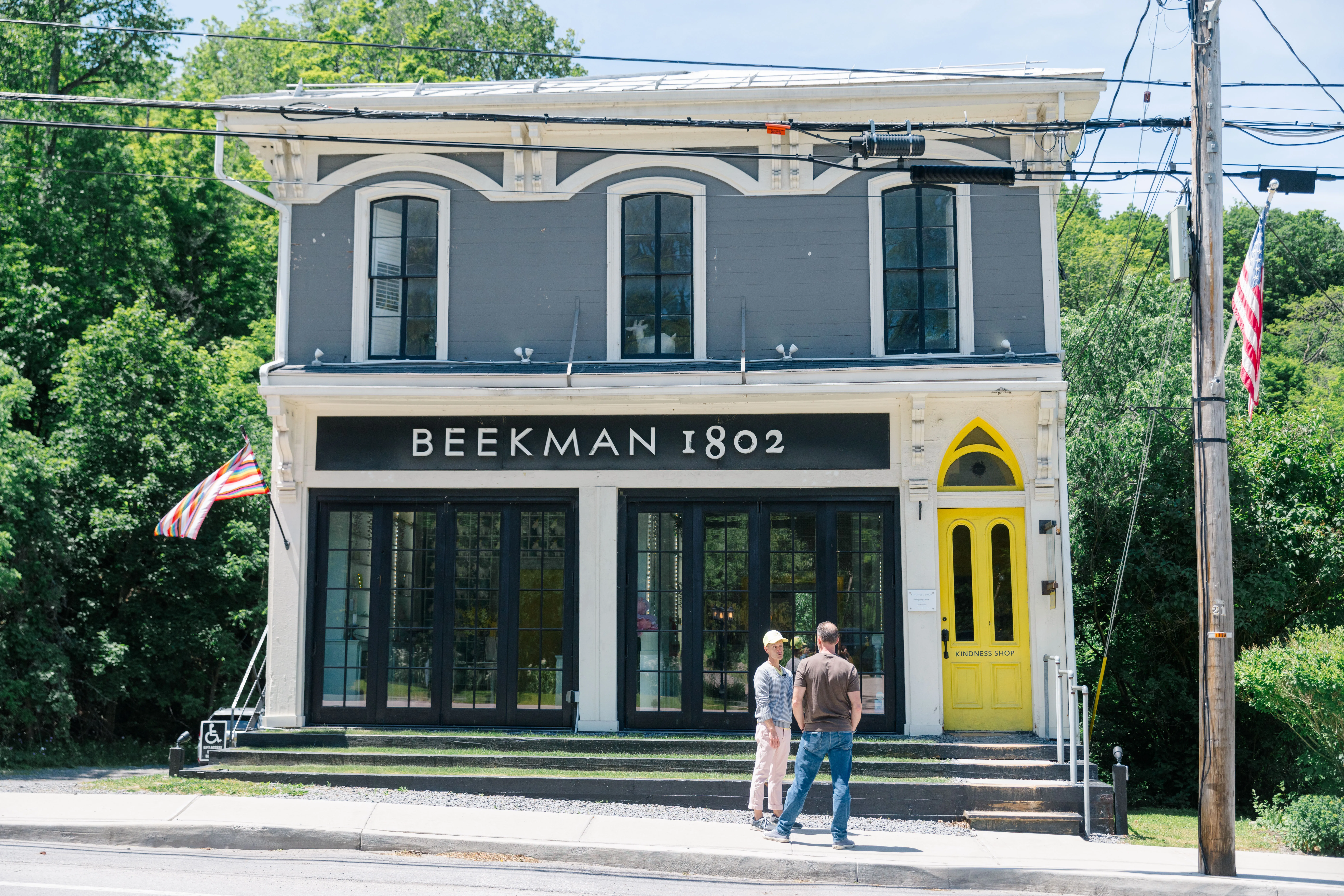
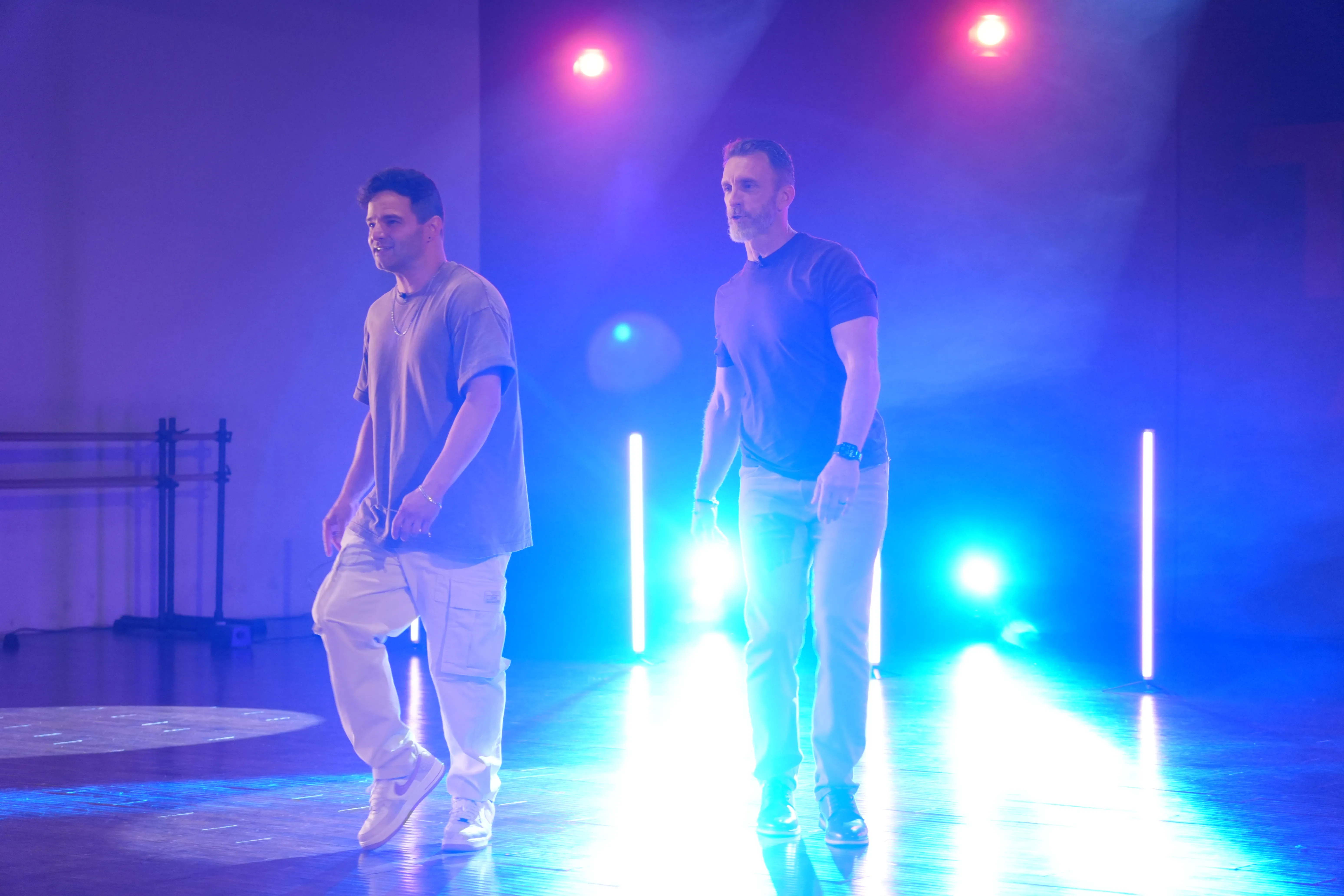
The tactile experience. When we visit a professional office, it's interesting—you get a tour—but it's not as experiential as going to a dance studio and actually dancing. I'm doing pliés—badly—with a smoke machine running. We're going to Beekman 1802—they make soaps and products derived from goat’s milk—and I'm going to learn to make soap, probably milk a goat. It feels a little like Dirty Jobs. Will I survive? Will I mess it up?
We’re also expanding the types of businesses we feature. In Season 1, a lot of the guests were already well-known names—large companies with tens or hundreds of thousands of customers. Now we're exploring businesses that are crushing it in their category, but aren't household names. Boo's isn't a massive brand—it's a destination, but it's not a household name. I didn't know it before we filmed. And I had a blast. Some of those conversations are already among my favorites.
What kinds of stories or moments do you think listeners will connect with most in Season 2?
I think people connect most with that moment of inception—the moment someone starts a business and then, one or two seconds later: "Holy—what did I just do?" We see the product that took 15 or 20 years. We don't see the stuff in between. And some of the most profound moments in these interviews are those early ones: "I can't believe I just sold my first cheesesteak." We're all newbies when we start something new. That's terrifying. But it's also really encouraging.
There's a lot of volatility right now—rising costs, uncertainty across the board. Is that showing up in the conversations you're having?
Definitely. Concerns about changing law, about how American businesses are perceived internationally, a lot of variability. The uncertainty right now may be at its highest in a couple of decades, possibly beyond what we saw during the pandemic. The risk is that people freeze.
But here's what I've found: not a single business owner I've spoken with has said, "It's too unpredictable. I'm done." In fact, the reverse. Some people said, "Yeah, people want to buy my business because it's doing so well. I'm not selling." They're all feeling uncertainty—myself included—but reacting with action rather than freezing up. That in itself is very inspiring.
The Lifeline is one of the most memorable parts of the show. What is it about that exercise that unlocks such honest conversations?
It's atypical. I've never seen another podcast do it. What it does is bring about a reflection that doesn't follow the standard interview sequence. Take Brian Scudamore from 1-800-GOT-JUNK. He's been on Oprah, on Ellen DeGeneres—he's been everywhere. As a result, he's well scripted. Not in a negative way—he just knows how to answer the questions that always get asked.
The Lifeline breaks that. He started talking about being the kid with buck teeth and glasses before any other kid in school had glasses—getting picked on. And you realize: 1-800-GOT-JUNK is in some form a response to being picked on. It's built around embracing the underdogs. That story wouldn't have come out through a standard interview. The Lifeline is a gateway to a different kind of conversation.
How has making this show changed the way you define success?
I'm getting more clarity around it. For a long time, I thought success was a destination—hit a certain number, you've made it. That got vanquished. Now I'm starting to believe success is really the ultimate form of self-expression.
What I'm noticing in these guests—and it's all of them—is that the ones doing so well are using their business as a platform for that. Andrew is bringing back his childhood through Boo's. Tim Milgram built a style of dance cinematography that didn't exist before, and now people are calling it a standard. The realization is that success comes from leaning into your true self so deeply that the business becomes a vehicle for that expression. That's what I keep learning.
What's one shift in thinking you hope listeners take away from Season 2?
That the journey is neither over nor has it just started. You're somewhere on the lifeline. A lot of people think, "I'm starting my business"—but no, you started it the day you were born. It's been building in some capacity, and you'll have a better business when you recognize all the work you've already been putting in.
And on the other side, some people arrive at a certain point and assume that’s where things will stay. But there's not a single interview we've had where things just stopped. They got better, got worse, changed—but overall, greater self-awareness and greater self-expression have always happened as people kept going.
What would you say to someone who's in the thick of it right now—building something, and feeling further away from self-made than ever?
First, I'd say: you're human. Acknowledge that. If you feel further away than ever, I don't want to deny that feeling. There's a culture out there that says, "Be fearless. Push forward." No—first, accept where you're coming from. Once you accept who you are, you can leverage who you are.
Once you accept that the feeling is normal, it doesn't mean you have to live with it. You can walk forward with fear and still walk forward. That takes courage. And once you start taking action, you see results—no matter how small. It becomes an affirmation: maybe I can do this. And that starts a loop of affirming and pushing forward. Somewhere during that process, there's a fundamental shift in identity. And then watch out—we've got a new person on board.