


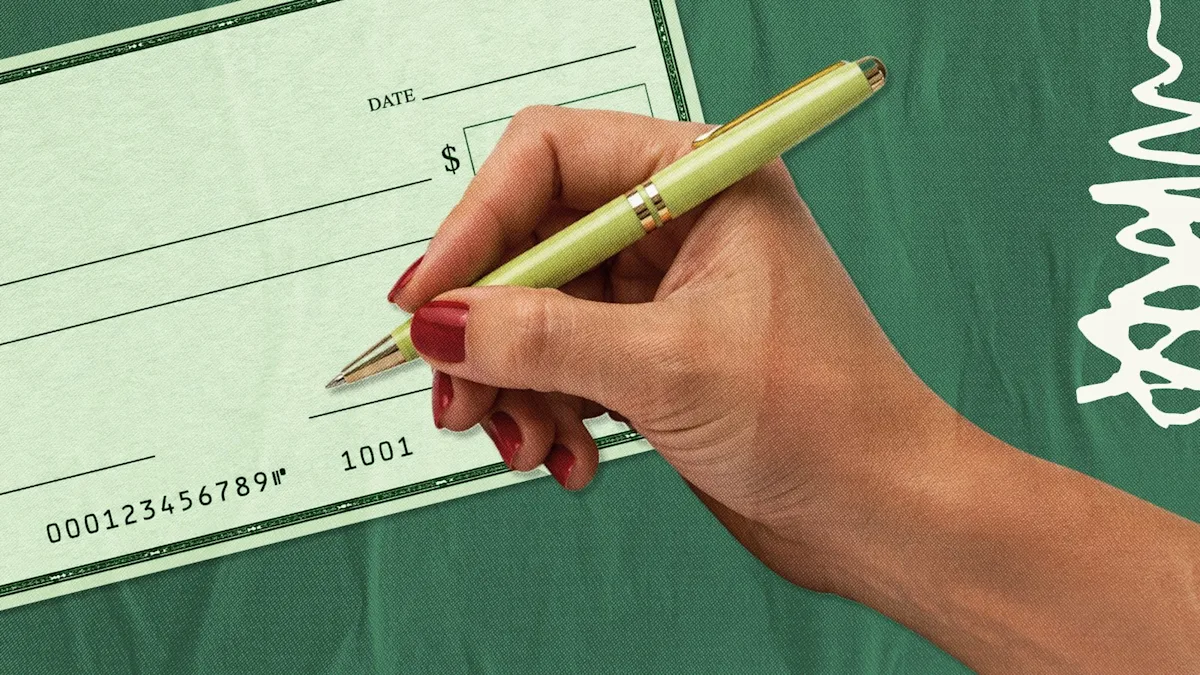
Checks still circulate more than most people expect. Clients pay invoices by check, vendors issue refunds by check, and some government payments arrive that way by default. Knowing how to endorse one properly—and what can go wrong if you don't—saves time and avoids a rejected deposit.
The process is simple, but it varies based on how you're depositing the check (in person vs. mobile), who it's made out to (you personally vs. your business), and whether you're signing it over to someone else. This guide covers all three scenarios clearly.
What Is an Endorsement?
An endorsement is your signature—and sometimes a brief written instruction—on the back of a check. It authorizes the bank to process the payment and transfer the funds into the specified account. Without a valid endorsement, most banks won't accept a check for deposit or cashing.
On the back of every check, you'll find a designated endorsement area, usually marked "Endorse Here" with one or more lines and a note warning you not to write below a certain line. Everything goes in that box.
Types of Check Endorsements
Blank endorsement
The simplest type: just your signature, nothing else. A blank endorsement makes the check payable to whoever holds it, which is useful for in-person deposits where you're handing it directly to a teller—but it's a risk if the check is lost or stolen before you get to the bank. Only use a blank endorsement when you're depositing immediately.
Restrictive endorsement
A restrictive endorsement adds a phrase that limits how the check can be processed. The most common version is "For deposit only" or "For mobile deposit only," written above your signature. This ties the check to a specific account and purpose, making it useless to anyone who finds it. For mobile deposits specifically, many banks require this exact language.
Special endorsement (signing over a check)
A special endorsement lets you transfer a check to another person or business. Write "Pay to the order of [Name]" above your signature. The named recipient can then deposit or cash the check as if it were written to them. Not all banks accept third-party checks, so confirm with the receiving bank before going this route.
How to Endorse a Check Step by Step
Step 1: Flip the check over and find the endorsement area.
It's typically in the top portion of the back of the check, marked with a line or box and the words "Endorse Here." There may also be a line below reading "Do not write, stamp, or sign below this line."
Step 2: Write the correct phrase if needed.
If you're making a mobile deposit, write "For mobile deposit only" before signing. If you're depositing in person and want extra security, "For deposit only" works the same way. If you're signing the check over to someone else, write "Pay to the order of [Name]" here.
Step 3: Sign your name as it appears on the front of the check.
This is the part that trips people up most often. Sign your name exactly as the check is made out to you—not your nickname, not a shortened version. If the check is made out to "Jonathan R. Smith" and you usually sign as "Jon Smith," sign it as "Jonathan R. Smith."
Step 4: Don't endorse until you're ready to deposit.
Especially for blank endorsements, signing a check before you're ready to deposit it creates unnecessary risk. Hold off until you're at the ATM, the teller window, or about to capture it in your mobile banking app.
Endorsing a Check Made Out to Your Business
Business checks require a bit more attention. If the check is made out to your business name—"Acme Consulting LLC," for example—you typically need to:
Write the business name exactly as it appears on the check
Sign your name below it
Add your title ("Owner," "President," etc.) if your bank requires it
This tells the bank that you're an authorized person signing on behalf of the business. If you're unsure what your bank expects, check with them before depositing a large business check—a rejected deposit is an avoidable headache.
If you're accepting check payments regularly for your business, it's worth reading through the full considerations around accepting checks for payment, including when they're worth the friction and when other payment methods are more practical.
Mobile Check Deposits
Mobile check deposits follow the same endorsement rules, with one addition: most banks require the phrase "For mobile deposit only" written above your signature. Some banks also ask you to include your account number.
Check your bank's specific instructions before making a mobile deposit—requirements vary, and a check endorsed incorrectly for mobile deposit may be rejected or, worse, processed and then flagged for reversal later.
Most mobile banking apps also display endorsement instructions on the deposit screen, so when in doubt, read what the app shows before you sign.
Common Endorsement Mistakes
Signing in the wrong place. Everything needs to go in the designated endorsement area, not anywhere else on the back of the check. Writing below the "Do not write below this line" marker can void the check or delay processing.
Name doesn't match the payee. If the check says "Jennifer Walsh" and you sign "Jen Walsh," your bank may flag it. Match the name on the front exactly.
Signing too early. A signed check that's lost is a security problem. Endorse it right before depositing.
Skipping the restrictive phrase for mobile deposits. If your bank requires "For mobile deposit only" and you skip it, the deposit may be rejected or returned.
Trying to deposit a check already made out to someone else. Third-party checks (signed over from one person to you) are not accepted by many banks. Confirm before accepting one from a client or vendor.
A Note on Business Banking Accounts
When endorsing a check made out to your business, you need a business account in the same name to deposit it—a business check deposited into a personal account will not be accepted. If you don't have one yet, Relay is worth a look: no monthly maintenance fees, mobile check deposit supported, and up to 20 checking accounts1 to keep your finances organized. Open a Relay account and get set up in minutes.
1Relay is a financial technology company and is not an FDIC-insured bank. Banking services are provided by Thread Bank, Member FDIC.
Frequently Asked Questions
Where Do You Endorse a Check?
On the back of the check, in the designated endorsement area—usually marked "Endorse Here" with one or more signature lines. Don't write below the line marked "Do not write below this line."
What Do You Write When Endorsing a Check for Mobile Deposit?
Write "For mobile deposit only" above your signature. Some banks also ask for your account number. Check your bank's specific instructions before depositing.
What If the Check Is Made Out to My Business?
Write your business name exactly as it appears on the front of the check, then sign your name below it. Some banks also ask for your title. Your bank account must be in the same business name as the check payee.
Can I Sign a Check Over to Someone Else?
Yes, using a special endorsement: write "Pay to the order of [Name]" above your signature. However, not all banks accept third-party checks, so confirm with the receiving bank before relying on this.
What Happens If I Endorse a Check Incorrectly?
Your bank may reject the deposit, return the check to you, or in some cases flag it for review. Common issues include mismatched signatures, missing "For mobile deposit only" language, or writing outside the endorsement area. Most errors are correctable—you'll just need to get a replacement check issued.
Is a Blank Endorsement Safe?
A blank endorsement—just your signature, no restrictions—makes the check payable to whoever holds it. It's fine for immediate in-person deposits but a security risk if the check is lost or stolen beforehand. For anything other than an immediate in-person transaction, use a restrictive endorsement.